

Growing educational demand across Africa
Many African countries began reinvesting in access to education in the late 1990s. Much of the investment was motivated ...

Most students with disabilities do not get good quality education in Africa. The author explains his personal experience in the African education system in Ghana. The author required spectacles in order to read and write, unfortunately, didn't have effective ones, and so by 14 was unable to read most printed groups. He mentions how he felt behind and lacked much assistance with his poor vision, and it was not until he went to a residential school for blind people where they taught students to type and use braille. Here he was introduced to cassettes and met other blind students, able to learn valuable skills and knowledge allowing him to go to college. However, this experience was exceptional. A recent Sightsavers paper to UNESCO 2020 Global Education Monitoring Report shows that the vast majority of children with visual impairments in sub-Saharan Africa do not receive a good quality education. A census of 13 African countries indicates only 58.6% of boys and 60.1% of girls with visual impairments aged 12 are literate. Further, large numbers of these children don't go to school at all, 30% of all students with visual impairments aged 12 have never been enrolled.Â
View Source
Many African countries began reinvesting in access to education in the late 1990s. Much of the investment was motivated ...

Economic contraction in Africa due to COVID-19 threatens countries to invest in secondary education at a time when the d...
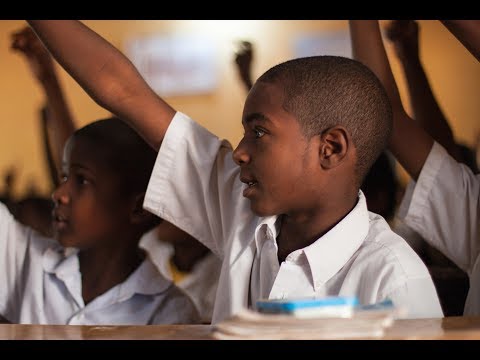
In this video by the World Bank, they showcase basic alarming facts on the state of education in Africa. Through graphic...
This notice has been removed
The content is no longer available
Most students with disabilities do not get good quality education in Africa. The author explains his personal experience in the African education system in Ghana. The author required spectacles in order to read and write, unfortunately, didn't have effective ones, and so by 14 was unable to read most printed groups. He mentions how he felt behind and lacked much assistance with his poor vision, and it was not until he went to a residential school for blind people where they taught students to type and use braille. Here he was introduced to cassettes and met other blind students, able to learn valuable skills and knowledge allowing him to go to college. However, this experience was exceptional. A recent Sightsavers paper to UNESCO 2020 Global Education Monitoring Report shows that the vast majority of children with visual impairments in sub-Saharan Africa do not receive a good quality education. A census of 13 African countries indicates only 58.6% of boys and 60.1% of girls with visual impairments aged 12 are literate. Further, large numbers of these children don't go to school at all, 30% of all students with visual impairments aged 12 have never been enrolled.Â
No results found
Try a different search term
Something went wrong
No notices yet
No notices match these filters
Couldn't load notices
You're all caught up 🎉

Sign in to continue to Global Noticeboard
Enter your email to receive a reset link
Create a new password for your account
You are marking this Notice are inappropriate, and you belive it infringes on the Global Noticeboard Community Guidelines (link). Is this so?
Create 3 Noticeboards to earn this Silver level Community Champion Badge.
View all badges that you can earnPlease tell us why you are reporting this content.

Discussion (0)
No comments yet