
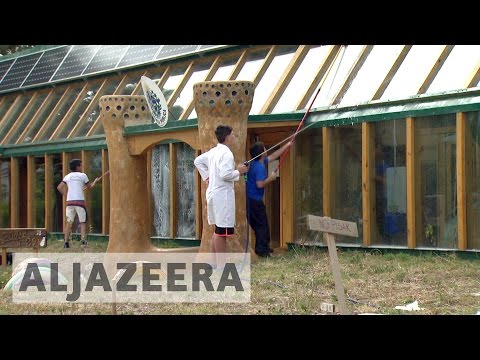
Self-sustainable school in Uruguay
What does a self-sustainable school look like? An unusual structure has received top marks in Uruguay to become Latin A...

Uruguay’s “Plan Ceibal†has transformed education in its country, and now some other countries across the continent are looking up to it. Uruguay has been quickly recognised as one of the countries with the best response plan to the COVID-19 pandemic. It was also prepared to continue providing quality education for all of its students. However, Uruguay's national virtual educational program, Plan Ceibal, was put in place long before quarantine – over a decade ago, in 2007. Ana Maleplate was in the first generation of Plan Ceibal kids. “Well, it made us all connected and using computers in class,†she said. “I got the first computer that came out.†In just five years, the World Bank confirmed that Uruguay “managed itâ€: “all 300,000 students in the country’s public schools each have their own computer.â€Among its many programs, Plan Ceibal also comes with a national online learning platform, Crea. Gabriel Ramos Machado has been teaching through Crea for more than two years, and explains a little bit of the evolution: “When they started with the Ceibal program, it was giving out those ceibalitas, a kind of 'No One Left Behind' sort of thing – one laptop for every child, so all children, even in the most rural areas, and regardless of their socioeconomic situation could have access to technology, to being able to learn more technology with the laptops. Then it just kept expanding."
View Source
What does a self-sustainable school look like? An unusual structure has received top marks in Uruguay to become Latin A...
What constitutes a quality education? Today, quality is most often measured through the OECD’s PISA (Programme for In...

Since 2000, there has been enormous progress in achieving the target of universal primary education. The total enrolment...
This notice has been removed
The content is no longer available
Uruguay’s “Plan Ceibal†has transformed education in its country, and now some other countries across the continent are looking up to it. Uruguay has been quickly recognised as one of the countries with the best response plan to the COVID-19 pandemic. It was also prepared to continue providing quality education for all of its students. However, Uruguay's national virtual educational program, Plan Ceibal, was put in place long before quarantine – over a decade ago, in 2007. Ana Maleplate was in the first generation of Plan Ceibal kids. “Well, it made us all connected and using computers in class,†she said. “I got the first computer that came out.†In just five years, the World Bank confirmed that Uruguay “managed itâ€: “all 300,000 students in the country’s public schools each have their own computer.â€Among its many programs, Plan Ceibal also comes with a national online learning platform, Crea. Gabriel Ramos Machado has been teaching through Crea for more than two years, and explains a little bit of the evolution: “When they started with the Ceibal program, it was giving out those ceibalitas, a kind of 'No One Left Behind' sort of thing – one laptop for every child, so all children, even in the most rural areas, and regardless of their socioeconomic situation could have access to technology, to being able to learn more technology with the laptops. Then it just kept expanding."
No results found
Try a different search term
Something went wrong
No notices yet
No notices match these filters
Couldn't load notices
You're all caught up 🎉

Sign in to continue to Global Noticeboard
Enter your email to receive a reset link
Create a new password for your account
You are marking this Notice are inappropriate, and you belive it infringes on the Global Noticeboard Community Guidelines (link). Is this so?
Create 3 Noticeboards to earn this Silver level Community Champion Badge.
View all badges that you can earnPlease tell us why you are reporting this content.

Discussion (0)
No comments yet